

In North Morowali, Central Sulawesi, nickel mining has left behind environmental problems that local communities feel firsthand. Residents have lost springs they once relied on, and the only one left was later cut off by flooding. Damaged roads, dust, and health problems add to what people living near the mining area have to endure. So how much do these losses actually amount to, from the disappearance of water sources and declining community productivity to the broader damage to the environment?
The question matters because Indonesia continues to strengthen its position in the global electric vehicle supply chain. Investment in critical minerals, particularly nickel, has brought economic growth to several regions, yet investment figures and regional revenues do not necessarily capture the full cost of industrial activity. Part of that cost is carried by the communities and the environment around mining areas.
One way to calculate these losses is through environmental economic valuation. This method estimates the value of lost natural benefits, as well as the cost of restoring them.
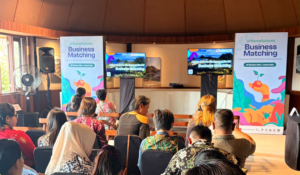
The issue was the focus of INTRA Institute’s public lecture titled “Valuasi Ekonomi atas Dampak Lingkungan dan Sosial pada Rantai Nilai Mineral Kritis di Sektor Kendaraan Listrik”. INTRA Institute, knowledge generator of Avantierra, collaborated with the Department of Economics and Development Studies, Faculty of Economics and Business, Universitas Tadulako, to host the lecture on Friday, November 6, 2026. The online event drew more than 100 participants from across Indonesia and brought together perspectives from academia, local government, and civil society.
Economic Valuation: Counting the Losses That Go Unseen
Environmental economic valuation helps estimate the losses that occur when industrial activity reduces or eliminates the benefits nature provides. The calculation covers a wide range of impacts, from health costs caused by pollution and the loss of water sources to declining fish catches and reduced agricultural productivity.
Rosdian, lecturer and Head of the Quality Assurance Center at the Faculty of Law, Universitas Tadulako, explained that such calculations are essential for identifying which losses must be restored and what that restoration will cost. According to her, many impacts of industrial activity on communities have yet to be accounted for in economic terms.
“Economic valuation is important because it can determine which losses must be restored and how much it will cost. From the studies we have reviewed, there are many harmful effects on communities that have not been counted,” she said.
She stressed that the calculations must go further and lead to tangible recovery. In her view, those who cause environmental damage should bear the cost, communities have the right to regain what they have lost, and the environment needs to have its functions restored.
“Economic valuation must ensure that those responsible pay for environmental damage, community rights are restored, and environmental functions are returned to their original condition.”
To calculate these losses, the valuation method must be adjusted to the type of impact and the conditions of the area. Meity Ferdiana Paskual, lecturer at the Faculty of Economics and Business, Universitas Tadulako, explained that one approach is Benefit Transfer, which uses research findings from other locations as a reference while adjusting the values to the characteristics of the area being studied. Cost-based and productivity-based approaches can also be used to calculate other types of losses.

Meity added that the valuation process requires the involvement of various disciplines and of the communities directly affected. That way, the calculation does not rely on economic approaches alone, but also reflects actual conditions on the ground.
Those conditions matter especially in the electric vehicle supply chain, which still depends on minerals obtained through mining. According to Meity, the shift toward cleaner energy must take into account the environmental impact in the places where those minerals are extracted, because poorly managed mining can shift the burden of pollution onto surrounding communities.
“It’s like we’re moving that dirt into our own home here, where the energy is mined, especially when the activity’s not clean.”
For this reason, Meity stressed the importance of the polluter pays principle, which states that those who cause pollution must pay for environmental damage and restoration. She noted that this responsibility is separate from a company’s obligation to run corporate social responsibility (CSR) programs, since compensation should go toward repairing actual damage rather than simply being delivered through social programs.
“A company’s obligations extend beyond CSR. They also include the principle that whoever pollutes must pay. Companies must restore conditions to how they were before the pollution occurred. This is not CSR, but rather compensation for the damage caused, which is separate from CSR obligations.”
Reading Industrial Impact from a Regional Perspective
Putting these principles into practice begins with knowing what is actually changing on the ground. As industries grow in different regions, local governments need data that captures economic, social, and environmental change. Husain Ali, S.E., M.M., Head of BAPPERIDA (the Regional Development Planning, Research, and Innovation Agency) of Central Halmahera Regency, said the regional government is strengthening the integration of this data to inform policymaking.
“We are currently strengthening our database. We want to improve the data integration system so that it is easier for the government to develop strategic policies in response to industrial growth. On the environmental side, the Environmental Agency constantly maps environmental changes in and around industrial areas. As of October, we are taking water quality index measurements at all points, along with waste management, etc,” Husain explained.
However, stronger data alone is not enough. Husain added that the regional government still needs studies to calculate the impact of industrial growth and determine the necessary steps.
“The regional government is open to constructive, science-based input to calculate impacts and strategic recommendations on where to begin revitalizing the environment affected by industrial growth and encouraging companies to take responsibility for their impacts,” he said.
The need to calculate these impacts is clear in North Morowali, one of the targets of nickel mining investment in Central Sulawesi. Ufudin, Head of the Program Division at Yayasan Kompas Peduli Hutan (KOMIU), said the regency has 39 nickel mining permits, 18 of which are still active. According to him, mining activity has caused environmental and health problems, while the distribution of its economic benefits is seen as unfair.
“The revenue-sharing fund has been neither effective nor fair. There are also environmental and health problems, such as the impact on fisheries and rice fields. Then there are the floods in North Morowali, dust that has contributed to 1,480 cases of acute respiratory infection (ARI), damage to infrastructure such as roads, and the loss of the community’s springs. Of the springs that used to exist, only one remains, and even that one has been cut off by flooding,” Ufudin explained.
Yet on the ground, efforts to address these impacts still run into obstacles, from regulatory limits to a shortage of restoration funding. Ufudin said mining permits are held by the central government, which limits the room regional governments have to restore the environment.
“Unfortunately, these permits are still held by the central government, so it remains difficult for regions to carry out environmental restoration. All that can be done is to use post-mining reclamation funds, but the amount is still small. Securing funds for restoration is also difficult. On top of that, there are discrepancies in the recorded area of mining land. Our data shows a much larger figure than what was previously stated,” he continued.
This is where economic valuation comes in. By putting a monetary value on environmental damage, it turns scattered impacts into figures that can be weighed against restoration costs, giving regions a stronger basis to justify and secure funding, even when their authority is limited. “Economic valuation can help close this gap,” he emphasized.
Making Sure Calculations Lead to Recovery
These problems show that economic valuation should not stop at calculating the value of the damage. The results need to serve as a basis for determining who is responsible, estimating the cost of restoration, and ensuring that communities regain their rights.
In Indonesia, guidelines for calculating environmental losses are in fact already set out in Minister of Environment Regulation No. 7 of 2014. For these guidelines to work, they need to be supported by open baseline data and monitoring, independent experts, and access for communities to submit complaints and evidence of their losses. Oversight is also needed to ensure that compensation is actually received and that environmental restoration is carried out.
None of this can be done by one party alone. Academics strengthen the methods and the basis for the calculations, civil society organizations (CSOs) bring evidence and findings from the field, and regional governments translate the results of the studies into policy. The information produced can also help investors understand the environmental and social risks across the electric vehicle value chain.
This public lecture is part of that effort. INTRA and Universitas Tadulako seek to broaden understanding of environmental economic valuation among students, young researchers, academics, and local stakeholders. The event also builds on the capacity-building work INTRA previously carried out with the SDGs Center at Universitas Padjadjaran in August 2026.
With more comprehensive calculations, environmental losses are expected to no longer be overlooked in industrial development. The cost of damage is borne by those responsible, community rights are restored, and environmental functions are returned, so that the energy transition can move forward alongside the protection of communities and the environment in mineral-producing regions.